

SPEED Act and AI infrastructure sit at the center of a high‑stakes fight over how fast the United States can actually build the hardware behind artificial intelligence. Big Tech wants faster permits, environmental advocates fear weakened safeguards, and lawmakers are split on how far reform should go. The House vote on the SPEED Act will test whether Washington is ready to trade procedural friction for geopolitical speed in the AI race.
SPEED Act and AI Infrastructure: What Is Really at Stake?
What the SPEED Act Actually Does
The SPEED Act — “Standardizing Permitting and Expediting Economic Development Act” — amends the National Environmental Policy Act (NEPA) to streamline environmental reviews for major federal actions. The bill reframes NEPA as a purely procedural statute, tightens review timelines for agencies, and narrows the window for lawsuits challenging project approvals to 150 days instead of six years.
Backers argue this is essential to accelerate data centers, transmission lines, and semiconductor fabs that currently face multi‑year delays due to layered federal reviews and litigation risk. As policy analyst Maria Jensen at the Brookfield Institute puts it, “The SPEED Act is less about skipping environmental review and more about constraining how long NEPA can be weaponized as a slow‑motion veto.”
Why Big Tech Is Pushing So Hard
Companies like OpenAI, Meta, Microsoft, and data‑center consortia have lined up behind the SPEED Act because the next wave of AI models requires massive, power‑hungry infrastructure. OpenAI’s policy lead Chan Park explicitly links permit reform to the company’s ability to keep investing in U.S. data centers, networking, and supporting infrastructure. The Data Center Coalition similarly calls “comprehensive permitting reform” a must‑have to win the AI race and sustain hundreds of billions of dollars in digital‑infrastructure investment each year.
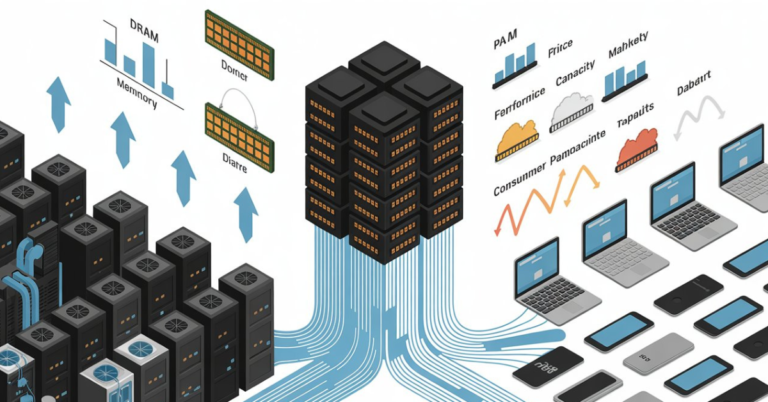
AI‑optimized facilities can draw as much power as a small city, and analysts project U.S. data centers could consume more electricity than entire countries like Japan or Turkey by 2030. “From an infrastructure perspective, AI is not software, it is steel and copper in the ground,” notes Dr. Elena Morozov, an AI‑energy systems researcher at Stanford University. “Without faster permitting, capital will chase friendlier jurisdictions abroad.”
AI Infrastructure, China, and the Geopolitics of Speed
Supporters of the SPEED Act frame it as a strategic response to China’s rapid build‑out of AI compute and energy infrastructure. Think‑tank assessments of U.S.–China AI competition point to permitting as a weak link, arguing that delayed data centers, substations, and transmission lines directly erode U.S. model‑training capacity. The Biden administration’s AI power and permitting assessment similarly urges accelerating approvals while preserving core protections.
Industry leaders echo this geopolitical logic. EQT CEO Toby Rice told Congress that U.S. AI leadership “requires permitting reform” to unlock domestic energy and infrastructure at scale, warning that current processes are “byzantine” and slow compared with rivals. As lead analyst Jordan Hale at the Atlantic Tech Forum observes, “The question is no longer whether permitting reform is needed, but whether Congress can design it without hollowing out the public‑interest checks that give projects legitimacy.”
The Grid Is the New Bottleneck
Even if permits are streamlined, AI infrastructure still collides with a stressed and aging U.S. grid. Studies and market analyses show AI‑driven data centers are already distorting local power quality and pushing utilities in Virginia, Texas, and the Midwest toward capacity limits. The White House AI power report warns that NEPA reviews and interconnection queues can take years, slowing the build‑out of clean generation and transmission needed to support AI loads.
Power‑sector analysts argue that permitting reform must be paired with grid‑modernization incentives, not treated as a standalone fix. “Fast‑tracking data centers without fast‑tracking transmission is like widening a highway off‑ramp while leaving the main interstate at one lane,” says Dr. Marcus Lee, a grid‑planning expert at MIT.
Political Fractures: Freedom Caucus vs. Democrats
On Capitol Hill, the SPEED Act and AI infrastructure debate has scrambled traditional lines. The bill has bipartisan sponsorship from House Natural Resources Chair Bruce Westerman and Democrat Jared Golden, reflecting broader recognition that NEPA timelines need reform. At the same time, the Freedom Caucus threatens to block the rule over Golden’s amendment limiting a president’s power to revoke energy permits, even as some Democrats remain wary of environmental rollbacks.
Republicans hold only a slim House majority, meaning a handful of defections could sink the bill unless enough Democrats cross over. This creates a paradox: business‑aligned conservatives demanding a cleaner bill, and moderates in both parties trying to balance climate concerns with AI competitiveness and semiconductor expansion under the CHIPS and Science Act.
What Passage or Failure Would Signal
If the SPEED Act passes, expect a wave of test‑case projects: AI campuses, semiconductor fabs, and high‑voltage lines explicitly structured to exploit shorter NEPA timelines and tighter litigation windows. Counties would gain a more formal seat in environmental reviews, but communities and NGOs would have much less time to organize challenges.
If it fails, AI and semiconductor developers will continue to lean on executive‑branch workarounds — categorical exclusions, pilot programs, and state‑level incentives — while warning that the U.S. is ceding ground to faster‑moving competitors. For product builders and infrastructure investors, the core signal will be whether Washington is willing to trade legal optionality for deployment speed in the era of industrial‑scale AI.
Key Takeaways
-
The SPEED Act and AI infrastructure debate centers on how far to streamline NEPA without gutting environmental safeguards.
-
Big Tech views permitting reform as critical to sustaining multi‑billion‑dollar AI data center and semiconductor investments in the U.S.
-
Geopolitical competition with China is a major justification for the bill, tying permitting speed to national AI capacity.
-
AI data centers are already straining the U.S. electric grid, so permitting reform must align with grid upgrades, not bypass them.
-
The bill’s fate hinges on intra‑Republican conflict and whether enough Democrats accept faster permits in exchange for AI and industrial competitiveness.
Related Posts (Also Read)
Virtual Cell Challenge 2025: Altos Labs Wins Generalist Prize for Next-Gen Cell Modeling
References
-
SPEED Act bill summary – Congress.gov: https://www.congress.gov/bill/119th-congress/house-bill/4776
-
SPEED Act text – Congress.gov: https://www.congress.gov/bill/119th-congress/house-bill/4776/text
-
House Natural Resources Committee advances SPEED Act – NACo: https://www.naco.org/news/house-natural-resources-committee-advances-standardizing-permitting-and-expediting-economic
-
AI Assessment: Power and Permitting – White House report: https://bidenwhitehouse.archives.gov/wp-content/uploads/2025/01/AI-Assessment.-Power-and-Permitting.pdf
-
How AI Data Centers Are Reshaping America’s Electric Grid – Forbes: https://www.forbes.com/sites/rrapier/2025/03/26/how-ai-data-centers-are-reshaping-americas-electric-grid/
-
The Weakest Link: Strategic Inputs in U.S.-China AI Competition – ARI: https://ari.us/policy-bytes/the-weakest-link-strategic-inputs-in-u-s-china-ai-competition/
-
Can U.S. Infrastructure Keep Up with the AI Economy? – Deloitte: https://www.deloitte.com/us/en/insights/industry/power-and-utilities/data-center-infrastructure-artificial-intelligence.html