

Russian GRU cyberattacks on energy infrastructure are escalating in scope and precision. According to Amazon Threat Intelligence, Russian state-backed hackers have pivoted toward exploiting misconfigured network edge devices—particularly in the energy and critical infrastructure sectors. This shift marks a new chapter in cyber warfare, one that blends stealth, persistence, and minimal resource exposure.
Experts caution that these tactics could redefine how organizations defend their cloud and operational networks in 2026 and beyond.
A Shift Toward the Network Edge
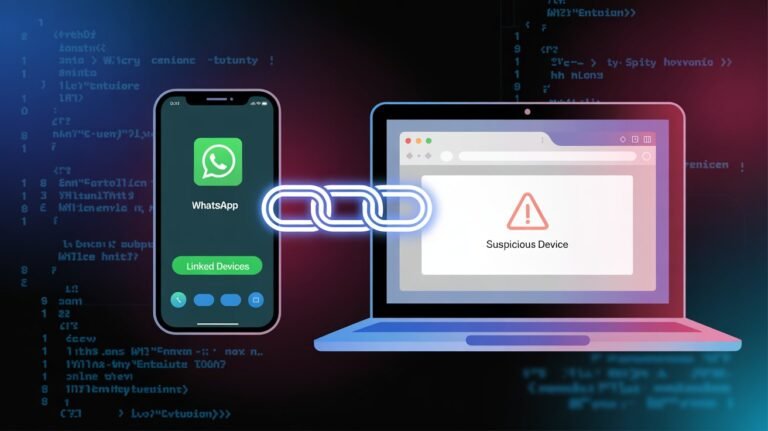
In late 2025, Amazon Threat Intelligence uncovered a long-running campaign by Russian GRU-linked actors, predominantly targeting energy infrastructure across North America and Europe. Instead of relying on software vulnerabilities, these state-sponsored groups exploited misconfigured network edge devices—routers, VPN concentrators, and remote gateways—to infiltrate systems silently.
“Misconfiguration is the new zero-day,” explained Dr. Elena Markovic, cybersecurity researcher at the University of Oxford. “Nation-state actors are realizing they can achieve equivalent access without burning costly, detectable exploits.”
Between 2021 and 2025, the attackers evolved from exploiting known vulnerabilities like CVE-2022-26318 and CVE-2023-27532 to primarily compromising cloud-hosted customer devices through weak configurations and unprotected interfaces. This subtle approach allowed them to harvest credentials and perform lateral movement within victim environments undetected.
The GRU’s Tactical Evolution
Amazon’s CISO C.J. Moses confirmed that telemetry data showed sustained GRU-linked activity overlapping with clusters tracked as “Sandworm” or “APT44.” Their operations displayed hallmarks of coordinated specialization—one subcluster focusing on initial network access, another handling persistence and host-based exploitation.
“GRU campaigns have historically demonstrated modularity,” noted Alex Frayne, lead analyst at the European Cyber Defense Initiative. “By delegating edge infiltration to one unit and persistence operations to another, they reduce operational noise and attribution exposure.”
The campaign’s targets extended beyond the energy grid. Technology providers, telecoms, and managed security service operators became secondary targets—particularly those servicing energy clients. This tactic amplifies disruption potential along the supply chain, a recurring priority in Russian cyber doctrine.
Credential Replay: The Silent Invasion
Instead of deploying ransomware or destructive payloads, the attackers relied on credential replay attacks. Once credentials were siphoned through compromised packet captures, they were reused against cloud logins and internal portals.
According to Dr. Wei Zhang, senior fellow at the International Cyber Policy Institute, “Credential replay signifies a pivot toward quiet persistence—staying inside the system long enough to exfiltrate data, not necessarily destroy it.”
This approach represents a major operational efficiency: fewer zero-days expended, minimal detection risk, and persistent control through legitimate credentials.
Defensive Imperatives for 2026
Amazon and cybersecurity agencies worldwide emphasize immediate action. Priority steps include:
-
Auditing all network edge devices. Review configurations, interfaces, and packet capture utilities for anomalies.
-
Isolating management interfaces. Place them behind segmented networks and restrict exposure.
-
Enforcing strong authentication. Replace default credentials and implement multi-factor authentication.
-
Detecting credential reuse. Track patterns of logins from unusual geographies or IPs.
-
Extended monitoring. Even after remediation, observe for delayed replay attempts.
“Organizations must shift from passive defense to continuous configuration validation,” commented Sarah Feldman, CTO of ArcticSec Labs. “Static compliance checks are no longer enough when attackers exploit your everyday routine.”
Amazon’s Coordinated Response
Amazon reported it had notified affected cloud customers, assisted in remediation, and shared intelligence with vendors and global partners. The company stressed the attacks originated from customer-side device misconfigurations, not AWS infrastructure itself.
This proactive collaboration, paired with ongoing intelligence sharing, has already disrupted several GRU-linked infrastructures. Yet experts warn these operations represent only one front in a growing state-on-state cyber contest over control of the digital energy frontier.
Key Takeaways
-
Russian GRU hackers now exploit misconfigured network edge devices instead of vulnerabilities.
-
The energy sector remains their top target for 2026.
-
Credential replay attacks indicate a stealth-centered, low-cost strategy.
-
Amazon urges organizations to audit configurations and monitor authentication logs.
-
State-sponsored cyber campaigns are increasingly modular and persistent.
Related News Article
7 Cisco Zero-Day Exploits: China Hackers’ Alarming Cisco AsyncOS Breach Revealed
References
-
Amazon Security Blog – Amazon Threat Intelligence report on Russian GRU operations (https://aws.amazon.com/blogs/security/)
-
Industrial Cyber – Energy and infrastructure security analysis (https://industrialcyber.co/)
-
Forescout Research Lab – OT network attack evolution (https://www.forescout.com/resources/)
-
Bitdefender Threat Intelligence – GRU-related malware analysis (https://www.bitdefender.com/blog/labs/)
-
CISA & NSA – Guidance to secure edge devices (https://www.cisa.gov/resources-tools)
-
European Cyber Defense Initiative – Critical infrastructure threat insights (https://ecdi.eu/)
-
International Cyber Policy Institute – Credential replay and state threat strategies (https://icpi.org/publications/)