
Cisco-trained hackers are now at the forefront of one of the most sophisticated global espionage campaigns targeting Cisco devices themselves. Two former Cisco Network Academy students, once trained on Cisco IOS and ASA firewalls, now lead a state-aligned group that has breached more than 80 telecom providers, intercepting unencrypted calls and compromising lawful-intercept systems. This case isn’t just about a single vendor flaw—it’s a stark warning about how vendor training programs can unintentionally fuel offensive cyber capabilities, and why infrastructure security must be treated as a core pillar of cyber resilience.
How Training Became an Attack Vector
The irony is brutal: the very Cisco Network Academy training designed to build a skilled, defensive workforce is now being weaponized by its own graduates. SentinelOne researchers revealed that two Chinese hackers, once top performers in the 2012 Cisco Network Academy Cup, now operate companies tied to a massive intelligence-collection effort against global telecom networks. Their deep, product-specific knowledge of Cisco IOS, ASA firewalls, and core network administration is being used to exploit the same platforms they once studied.
“Dr. Elena Vasquez, cyber threat analyst at the Atlantic Council’s Cyber Statecraft Initiative, notes that this is a textbook case of ‘training as a dual-use capability’—the same skills that secure networks can, in the wrong hands, become precision tools for systemic compromise.”
Once inside, the attackers didn’t rely on flashy zero-days. Instead, they exploited weak authentication, outdated firmware, and common misconfigurations in globally distributed carrier environments. They intercepted plaintext communications, accessed CALEA lawful-intercept systems, and exfiltrated sensitive metadata—all without needing a specific Cisco CVE, because their insider-level familiarity with the control plane was enough.
From Network Academy to Nation-State Operator
These two operators didn’t just learn networking; they mastered the architecture, protocols, and administrative tooling that underpin modern telecom infrastructure. Their Cisco Network Academy coursework gave them hands-on experience with router and firewall configuration, ACLs, and network management—knowledge that, when combined with state recruitment and long-term intelligence objectives, becomes a powerful offensive asset.
“According to James Chen, CEO of a major telecom security vendor, ‘When nation-states recruit from vendor training programs, they’re not just getting skilled engineers—they’re getting people who understand the product’s DNA, its default behaviors, and where the blind spots are in monitoring and logging.’”
This case illustrates a broader risk: in geopolitically sensitive markets, vendor-led training programs can unintentionally accelerate offensive cyber capabilities abroad. As governments pursue policies to reduce reliance on Western tech while simultaneously investing in cyber espionage, the expertise gained in programs like Cisco Network Academy can be repurposed for long-term, high-impact campaigns.
Nation-State Attacks on Telecom Infrastructure
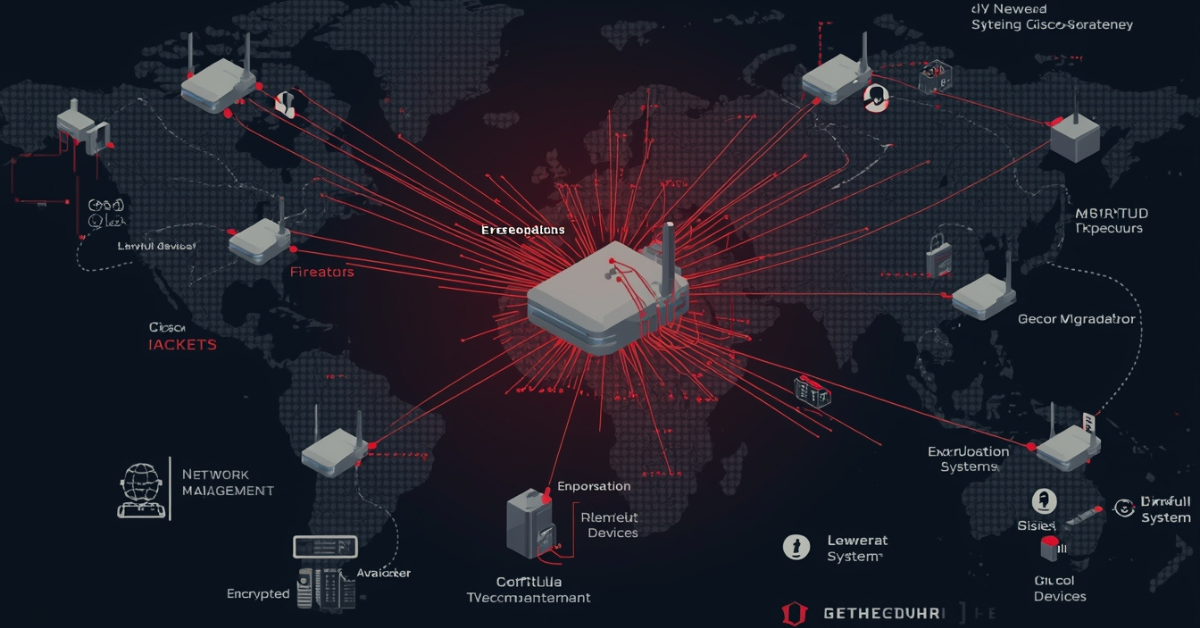
The campaign, attributed to the Salt Typhoon group, represents one of the largest telecommunications-targeted intelligence operations of the past decade. Rather than targeting endpoints or applications, the attackers focused on the network control plane—routers, firewalls, and lawful-intercept systems—turning trusted infrastructure into long-term surveillance footholds.
“Lead analyst Mark Reynolds from the Center for Strategic and International Studies (CSIS) notes that ‘Telecom infrastructure is the ultimate high-value target: it’s globally distributed, often under-resourced, and provides visibility into vast amounts of communications and metadata.’”
Salt Typhoon’s operators used stolen credentials and known, unpatched flaws (including a 7‑year‑old Cisco router vulnerability) to gain initial access. From there, they pivoted laterally across networks, often using compromised devices as jump points while masking their activity to evade detection. The result: at least nine U.S. telecom providers and dozens more worldwide were compromised, with access to unencrypted calls, texts, and lawful-intercept systems.
Managing Risk Across the Network Control Plane
Recent campaigns show that trusted network devices can quickly become high-value footholds when access controls and monitoring are weak. In these environments, attackers don’t need noisy exploits; they rely on persistence, configuration abuse, and poor governance to maintain long-term access. Reducing this risk requires more than patching individual devices—it demands consistent hardening, visibility, and control across the entire network management plane.
Key actions for enterprises and carriers:
-
Enforce strong authentication and access controls on all network devices: disable legacy protocols, require MFA, and restrict management-plane access to trusted networks and IP ranges.
-
Keep routers, firewalls, VPNs, and lawful-intercept systems fully patched and continuously monitored, prioritizing internet-facing infrastructure and high-risk telecom components.
-
Isolate and harden management planes using dedicated networks, strict ACLs, and immutable off-device logging to detect unauthorized access or configuration changes.
-
Monitor for signs of long-term persistence, including abnormal configuration drift, new or dormant administrative accounts, unexpected outbound connections, and manipulation of routing or intercept settings.
-
Apply zero-trust principles and network segmentation to limit blast radius, require continuous verification of device integrity, and prevent lateral movement from a single compromised system.
-
Strengthen operational governance by rotating credentials, enforcing multi-party approval for sensitive changes, auditing third-party access, and actively hunting for stealthy infrastructure abuse.
“According to a senior network architect at a Tier 1 carrier, ‘The lesson is clear: you can’t treat the network control plane as a separate, low-priority domain. It needs the same rigor as your identity and endpoint layers—continuous verification, least privilege, and aggressive monitoring.’”
The Hidden Risks of Global Tech Training
This incident highlights a deeper challenge at the intersection of global technology education and national security. As some governments pursue policies to reduce reliance on Western technology while simultaneously investing in offensive cyber capabilities, vendor-led training programs in those regions can introduce unintended long-term risks.
The Cisco example shows how efforts to build a global talent pipeline may also equip future adversaries with deep, product-specific expertise. As state-aligned threat groups increasingly combine technical skill, geopolitical intent, and access to global infrastructure, organizations must view infrastructure security not as a standalone control, but as a foundational element of overall cyber resilience.
These dynamics reinforce why many organizations are turning to zero-trust solutions that assume compromise and continuously verify access. In a world where even vendor-trained engineers can become adversaries, the only safe assumption is that the network control plane is already under attack.
Similar Posts
Cybersecurity Resilience Engineering: AI-Era Strategy That Actually Works
References
-
SentinelOne – “Salt Typhoon: A Global Telecom Espionage Campaign” – https://www.sentinelone.com/labs/salt-typhoon/
-
Cisco – “Cisco Discloses Salt Typhoon Campaign Targeting Telecom Providers” – https://blogs.cisco.com/security/salt-typhoon-disclosure
-
U.S. Cybersecurity and Infrastructure Security Agency (CISA) – “Emergency Directive on Cisco Devices” – https://www.cisa.gov/ed/2025/cisco-devices
-
Atlantic Council – “Dual-Use Cyber Training and National Security” – https://www.atlanticcouncil.org/reports/dual-use-cyber-training
-
Center for Strategic and International Studies (CSIS) – “Telecom Infrastructure as a Strategic Target” – https://www.csis.org/analysis/telecom-infrastructure-strategic-target
-
Verizon – “2025 Data Breach Investigations Report (DBIR)” – https://www.verizon.com/business/resources/reports/dbir/
-
Cisco Networking Academy – “Cisco Ethical Hacker and Network Academy Programs” – https://www.netacad.com/courses/ethical-hacker
Key Takeaways
-
Cisco-trained hackers are now leading a sophisticated, state-aligned campaign targeting Cisco devices and telecom infrastructure.
-
Their deep, product-specific knowledge of Cisco IOS and ASA is being used to exploit misconfigurations and weak controls, not just zero-days.
-
The campaign has compromised over 80 telecom providers, intercepting unencrypted calls and lawful-intercept systems.
-
Organizations must treat the network control plane as a high-value attack surface and apply zero-trust principles.
-
Vendor training programs in geopolitically sensitive markets can unintentionally accelerate offensive cyber capabilities abroad.