
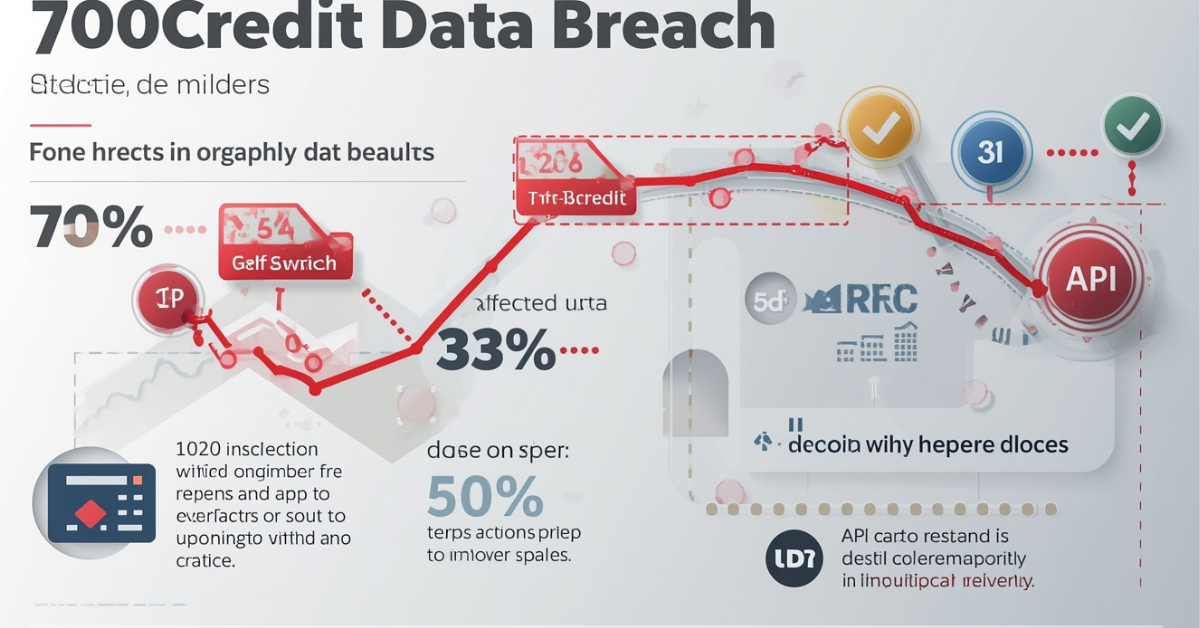
The 700Credit data breach has rocked North America’s automotive sector, exposing sensitive data of 5.8 million individuals. Hackers targeted a third-party API linked to the 700Dealer.com platform, stealing names, addresses, dates of birth, and Social Security numbers from May to October 2025. This incident underscores vulnerabilities in credit verification services serving 18,000 dealerships.
Breach Timeline
Attackers compromised a partner’s system in July 2025, accessing 700Credit’s API without detection until October 25. A velocity attack persisted for weeks, extracting 20% of consumer records despite API shutdown efforts. 700Credit confirmed no internal network breach, limiting damage to the application layer.
Notifications rolled out swiftly: dealerships alerted November 21, consumers starting December 22, with FTC and FBI reports filed via NADA collaboration. Michigan AG Dana Nessel urged immediate credit freezes.
Data Exposed and Risks
Victims face high identity theft risks from leaked PII, including SSNs critical for fraud. Automotive breaches like this contribute to 2025’s rising trend, with global costs hitting $4.44 million per incident on average. Dealerships now grapple with compliance and trust erosion.
“Third-party API flaws remain the weakest link in supply chains,” warns Dr. Elena Vasquez, cybersecurity researcher at MIT. “700Credit data breach proves validation processes must evolve.”
Company Response
700Credit offers 12 months of free credit monitoring, identity restoration, and a support hotline (866-273-0345). Enhanced API inspections, cybersecurity insurance boosts, and system overhauls are underway. A class-action lawsuit alleges negligent security, filed November 24 in Michigan.
Ken Hill, 700Credit Managing Director, states: “We’ve fortified defenses to prevent recurrence, prioritizing dealer education on best practices.” NADA recommends dealers verify notifications and opt-out if needed by December 5.
Industry-Wide Implications
FTC Safeguards Rule mandates dealerships implement risk assessments and vendor oversight post-breach. Automotive cyberattacks surged in 2025, with 297 incidents causing $22 billion in damages. Future threats target connected vehicles and EV infrastructure.
“Proactive AI-driven detection could cut breach costs by 30%,” notes Sarah Kline, lead analyst at Cybersecurity Think Tank. “Auto firms must segment networks now.”
Key Takeaways
-
Monitor Credit Urgently: Freeze reports and activate 700Credit’s free services to block fraud.
-
Dealers: Audit Vendors: Review API partners and comply with FTC rules via risk assessments.
-
Future-Proof Systems: Adopt AI detection and network segmentation against rising auto threats.
-
Legal Watch: Class actions signal accountability; expect regulatory fines.
-
Industry Shift: 2026 demands zero-trust models for third-party integrations.
Also Read (Similar Posts)
Cisco-Trained Hackers Lead Sophisticated Attacks on Cisco Devices – 5 Critical Lessons